
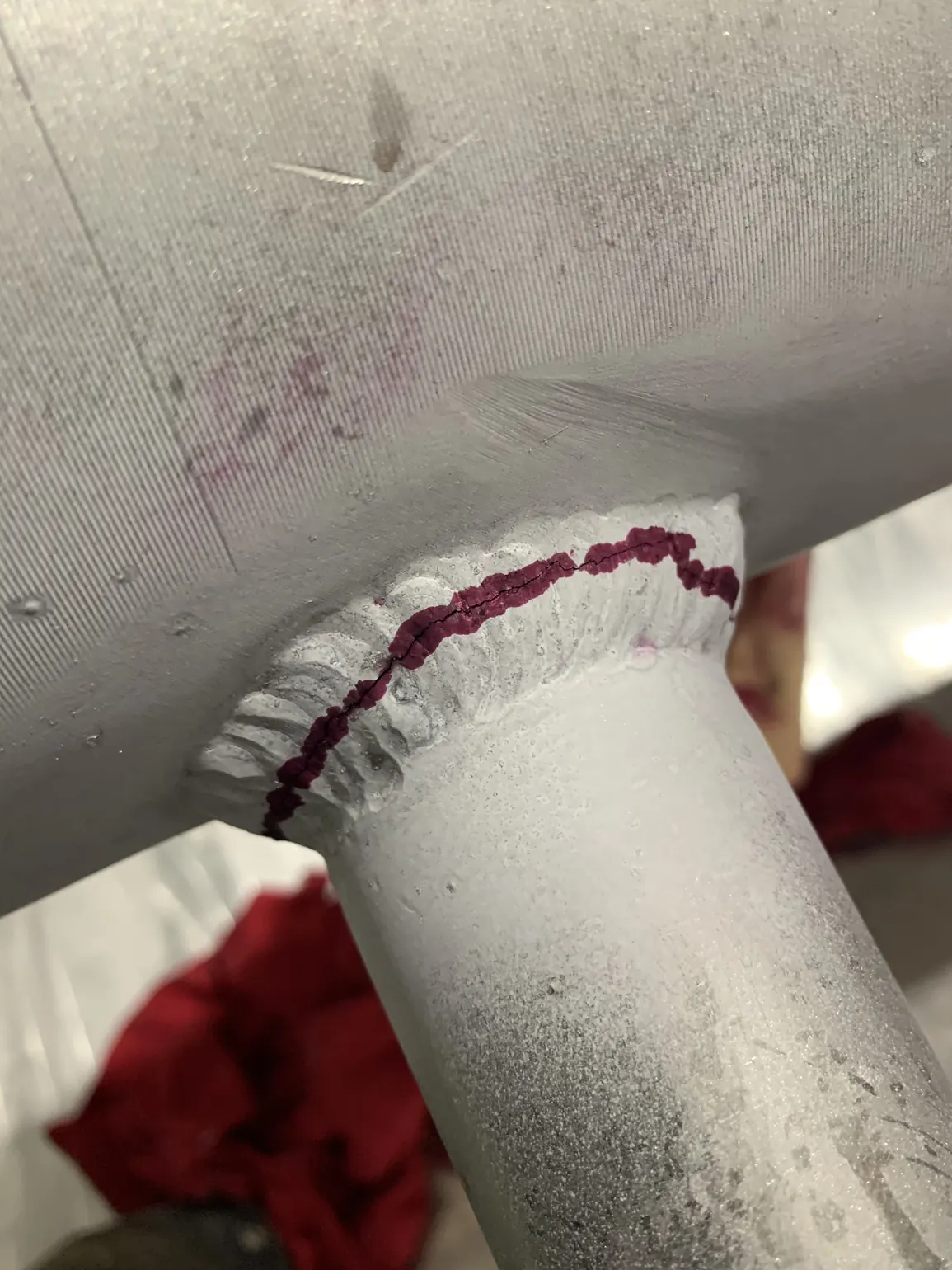
Non-destructive testing isn't one technique, it's a toolkit. Choosing the right method comes down to a single question: where is the flaw you're trying to find? Surface, just below the surface, or deep inside the material? Matching the method to the flaw is what makes an inspection meaningful.
Surface, Sub-Surface, and Volumetric
Each method has a sweet spot. Used correctly, they complement each other; used in isolation, any one of them can miss the defect that matters.
- Visual (VT): the first and most cost-effective method for surface defects, weld profile, and obvious damage.
- Magnetic Particle (MT): surface and near-surface flaws in ferromagnetic materials.
- Liquid Penetrant (PT): cracks and porosity open to the surface, on virtually any non-porous material.
- Ultrasonic (UT): sub-surface and volumetric flaws, plus precise thickness measurement.
- Magnetic Rope Testing (MRT): internal and external deterioration along the full length of wire rope.
The "best" method is the one suited to your material, geometry, and the type of flaw that would actually cause failure. Often the right answer is a combination.
How We Choose
Our CGSB-certified technicians select methods based on the asset, the applicable standard, and your duty cycle, then document exactly what was tested, how, and what was found. No guesswork, just a clear picture of condition you can act on.