
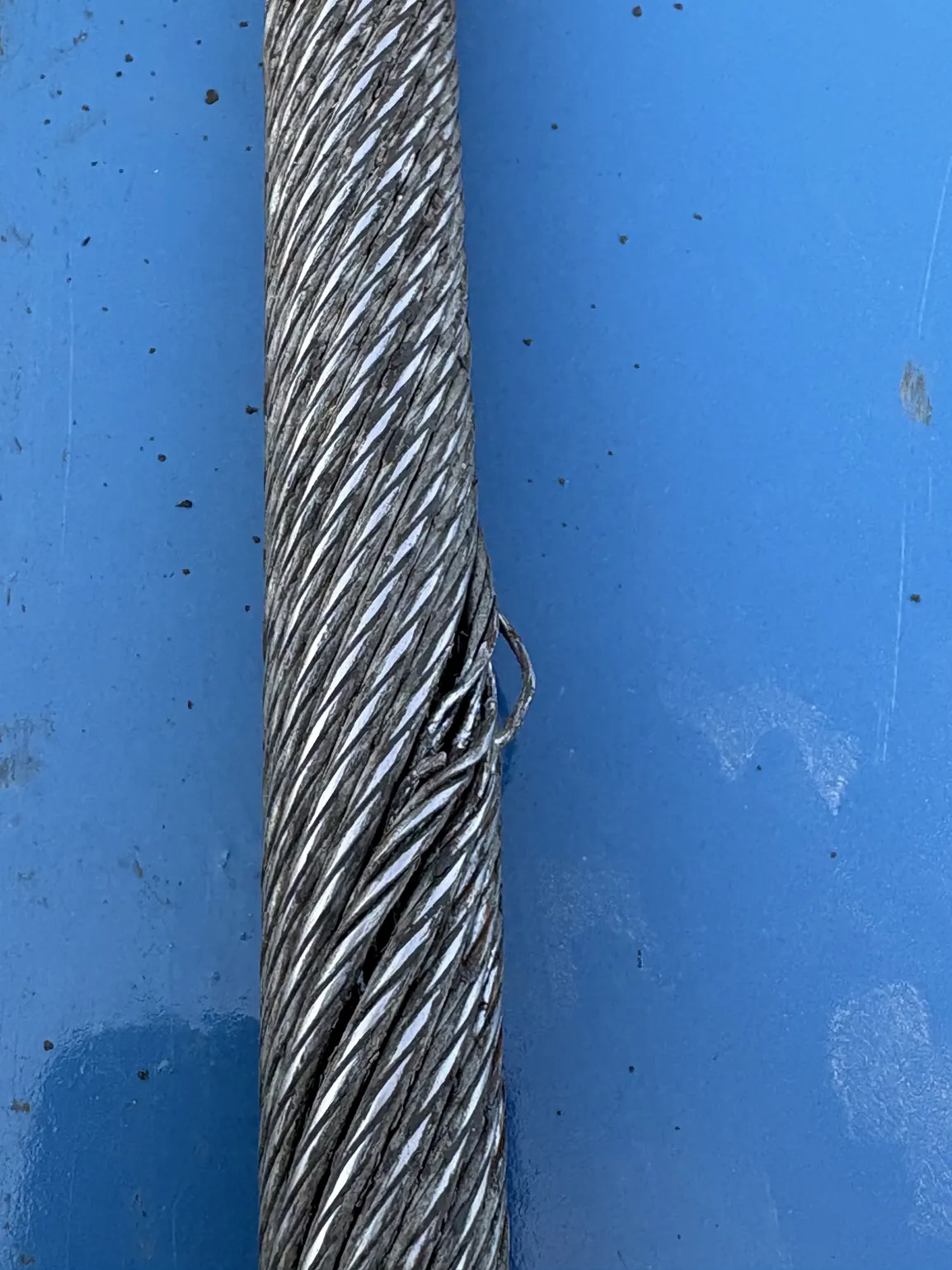
Wire rope is one of the most safety-critical components on any crane or hoist, and one of the easiest to misjudge. A rope can look perfectly serviceable on the outside while corrosion, fatigue, and broken wires quietly accumulate on the inside. Magnetic rope testing (MRT) is how we see what a visual inspection cannot.
What MRT Actually Measures
MRT uses a powerful magnetic field to saturate the rope as it passes through the test head. Sensors then detect two distinct types of deterioration: loss of metallic area (LMA), the gradual thinning caused by abrasion and corrosion, and localized faults (LF) such as broken wires, including internal breaks that never reach the surface.
The result is a continuous, repeatable record of rope condition along its entire length, not just a snapshot of the few feet an inspector can see and touch.
Why Visual Inspection Isn't Enough
Visual and tactile inspection remains essential, but it has hard limits. Internal corrosion and "valley breaks" between strands often leave no external sign until the rope is dangerously degraded. By the time damage is visible on the surface, significant strength may already be lost.
- Internal corrosion from trapped moisture and lost lubrication
- Broken wires in the rope core and between strands
- Fatigue that develops at sheaves and termination points
The safest programs pair MRT with regular visual inspection, magnetic testing finds hidden loss of section, while visual checks catch external damage, deformation, and lubrication issues.
When Your Wire Rope Should Be Tested
Inspection frequency should match how the rope is actually used. High-cycle production cranes, hoists in corrosive environments, and ropes supporting critical lifts warrant more frequent MRT than equipment in light, occasional service. Our inspectors help you set an interval based on duty cycle, environment, and the consequences of failure, then document every result.